Tuesday, 27 March 2018

Were feathered dinosaurs the ancestors of birds?


There is some evidence that there were species of dinosaur that had feathers, but these were not necessarily the ancestors of modern birds.


Sinosauropteryx was a carnivorous dinosaur that lived around 125-120 million years ago in what is now China. It was about one metre long. The fossils that have been discovered show that, instead of reptilian scales, parts of its body were covered by feathers.


Avimimus was a much later dinosaur (75-70 million years ago), also from China but slightly larger than Sinosauropteryx at 1.5 metres long, that also shows evidence that it bore feathers. This is due to the fact that its arm bones bore ridges of the same size and shape as those found on modern birds. It also had a mouth that was a similar shape to that of a bird’s beak.

So can these dinosaurs be seen as the direct ancestors of birds? The answer is “almost certainly not”, because the fossil record indicates that birds evolved from a completely different ancestry.

In that case, what was the function of the feathered arms if they were not the precursors of wings?

The suggestion has been made that these dinosaurs were warm-blooded and they evolved feathers as a means of keeping warm in winter. Other dinosaur species appear to have evolved fur for the same reason. It might also be that coloured feathers could have been useful as camouflage for small dinosaurs seeking to hide in vegetation.

It is a frequently made mistake to assume that the process of evolution implies some sort of purpose, in that each change between species of different time periods denotes a continuous progress from primitive to advanced. However, that is not the way that evolution works. There are many “dead ends” in the story of evolution, so it should not surprise us to find common features in more than one evolutionary sequence of creatures, but also to find that these features performed different functions.  

There was never any certainty that feathers would lead inevitably to flight. It just so happened that down one evolutionary path this was the end result, but that was not the case with the two species mentioned above.

© John Welford

Two very hungry insects


Some insect species have characteristics or behaviours that are absolutely amazing, especially when “scaled up” to human terms. Here are two particularly hungry insects:

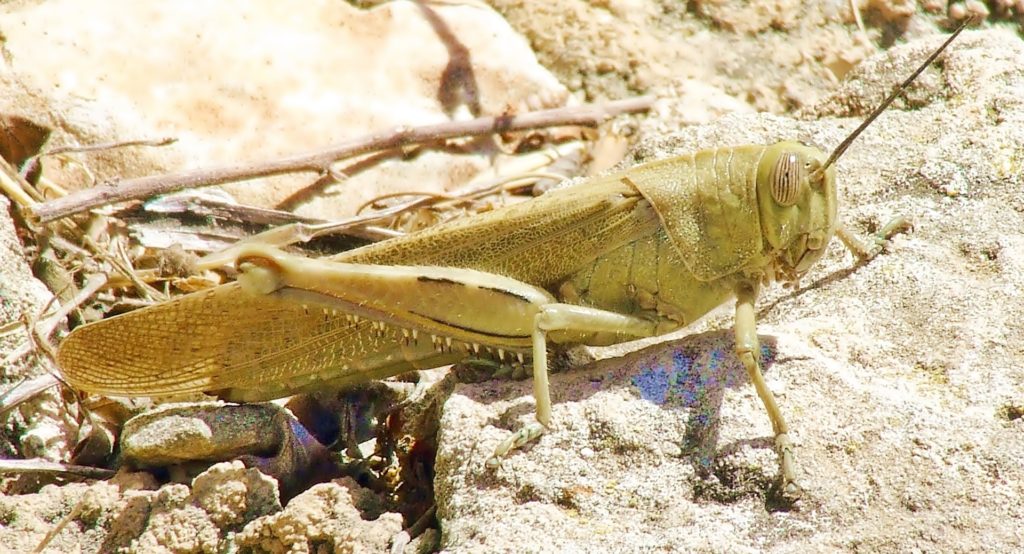
For example, we may think of man as being the most destructive creature on the planet, but he pales into insignificance when set alongside the humble locust. Although they only measure up to 6 centimetres long, they can easily eat their own body weight in food every day. A ton of locusts - which would represent only a very modest swarm – can eat as much food in a day as 2500 people.


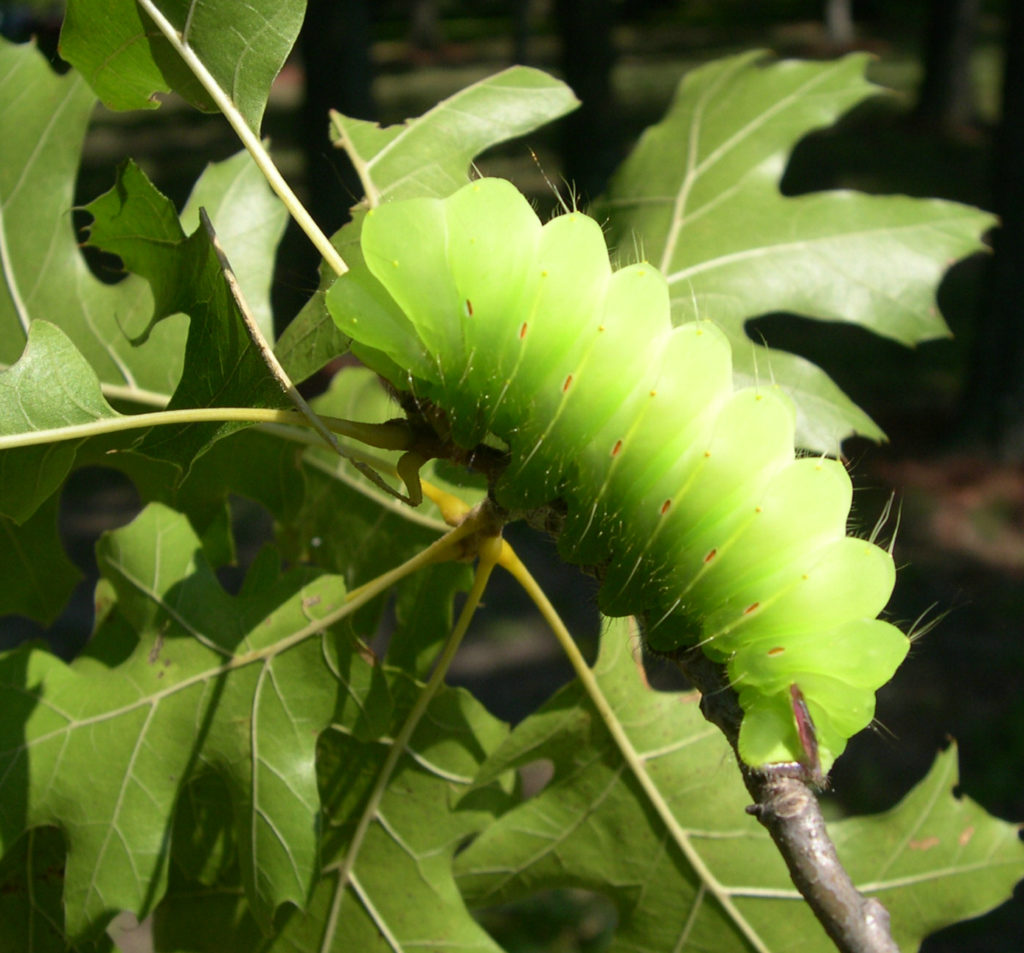
Another big eater is the larva of the polyphemous moth of North America. During its first 55 days it eats the equivalent of 86,000 times what it weighed when it first hatched. If it were a human baby, that would mean putting away 273 tons of food!

© John Welford

Friday, 23 March 2018

Aardvark: a living fossil


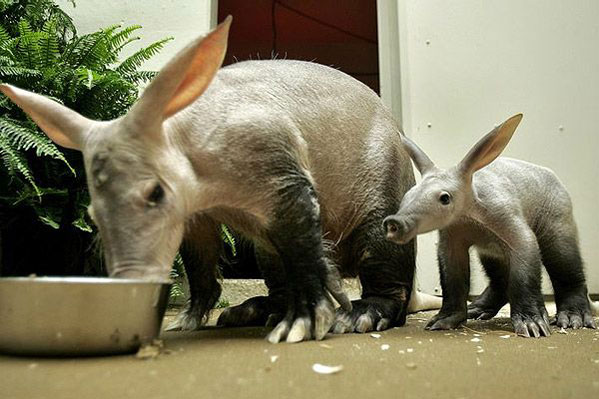
The aardvark is a strange-looking creature – to us, that is, no doubt it looks perfectly normal to other aardvarks. The name is Afrikaans for “earth pig”, but it is certainly not a pig despite some superficial resemblances. It does, however, do a lot of rooting about in soil and termite mounds for its food, which consists of ants and termites.
One of the more remarkable things about the aardvark is that it is a “living fossil”. When its mitochondrial DNA was sequenced in 1999 it was discovered that the aardvark could be the closest living relation to the first placental mammals that walked on planet Earth some 100 million years ago. It appears that its DNA has undergone hardly any change during that time. This posits the idea that the earliest placental mammals (i.e. not marsupials or monotremes) may have looked something like modern aardvarks, but we cannot be certain of that.
Another finding that came from the DNA analysis was that the aardvark is more closely related to the elephant than to the anteaters of South America, despite occupying a similar ecological niche to the latter.
© John Welford

Tall melilot


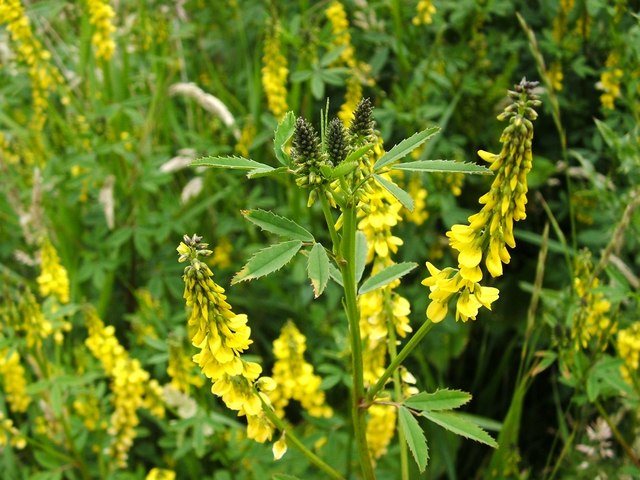
Tall melilot (Melilotus altissima) is a plant that grows wild in waste places such as roadsides and in woods. It is fairly common throughout Great Britain, although rarer in northern Scotland. It is not a native plant, having been introduced from the European Continent in the 16th century for use by herbalists.

Tall melilot deserves its label, as it grows up to 48 inches (120 centimetres) high. The branched stems carry stalked leaves (with three leaflets) and long slender flower spikes. The flowers, which appear from June to August, have deep yellow petals that hang down. As the plant’s name might suggest, melilot is a source of wild honey and it is attractive to bees and hoverflies. It needs to be visited by large insects because the weight of one landing on a flower causes the petals to be pressed downwards and the stiff stigma to touch the underside of the insect’s body where it will be able to be fertilised by pollen that has been carried from other flowers.

The tiny black seed-pod is egg-shaped and covered in downy hairs.

Tall melilot contains coumarin, an aromatic substance, in its leaves and stalks, and this causes the plant to smell pleasantly of new-mown hay when dried. As mentioned above, the plant was formerly favoured by herbalists, who used it to produce ointments and poultices for the reduction of swellings, blisters and bruises. It was also used in the 19th century for the relief of tired eyes when the flowers were infused in camphorated spirit.

Tall melilot is therefore one of many plants the beneficial use of which is now generally ignored. There is often a good reason for not treating ailments with products gathered from the wild, but there are also cases where to do so would cause no harm and should perhaps be encouraged. Maybe tall melilot is one of the latter.

© John Welford

Thursday, 22 March 2018

Some non-native species in Great Britain


Although Great Britain has a rich and diverse native wildlife, there are several species that would not be present were it not for human interference. Some of these introduced species are welcome additions, but others are much less so.

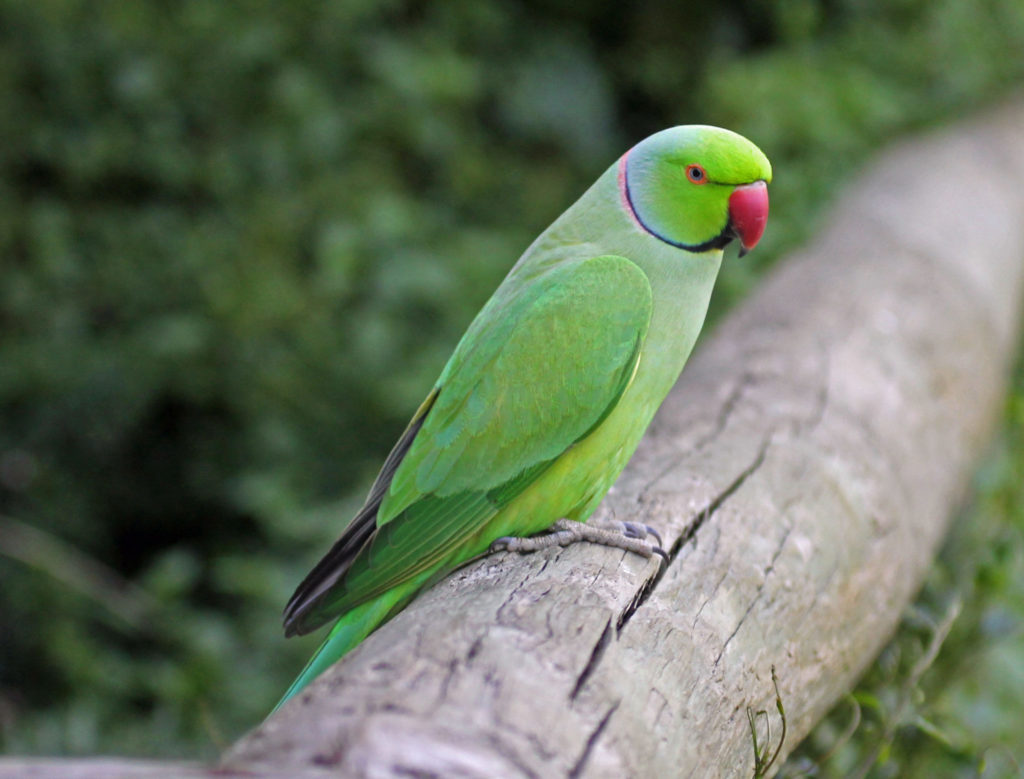
Parakeet – this bright green bird belongs to south Asia and sub-Saharan Africa, but it can also thrive in temperate climates such as that of western Europe (including southeast England where large flocks have established themselves). The current population probably bred from escaped cage-bird pets.

Muntjac – this small deer species was introduced from Asia around 100 years ago, but individuals that escaped from a wildlife park led to successful wild populations becoming established.

Mink -  these were introduced from America to be farmed for their expensive fur, but escapees soon found their way to England’s rivers where they caused havoc with populations of native animals such as water voles.

Grey squirrel – another American import that has had a devastating impact on native wildlife, particularly the red squirrel. The latter is now confined to a few isolated places in the British Isles, leaving the greys as the only squirrels that most people ever see.

Red-necked wallaby – an escapee from wildlife parks that has bred in the wild in places such as Scotland, Sussex and the Peak District. Marsupials belong to Australia, not Great Britain!

Red-eared terrapin – this is an American species of “water tortoise” that was brought from America to be sold by pet shops. Unfortunately, they can give a nasty bite, and many owners thought they were doing the right thing by releasing them into rivers and canals. Unfortunately, they now attack native wildlife such as ducklings.

All in all, the import of non-native species has not always been a good idea due to the unintended consequences when escaped pairs create feral populations. It seems as though it is imports from the Americas that have proved to be most problematic!
©John Welford

Wednesday, 21 March 2018

Plants found on salt marshes


There are very few environments that do not support plant life of some kind, although some places are more challenging than others. Salt marshes, which are low-lying coastal areas in estuaries and harbors that are flooded at high tide but exposed at low tide, make special demands of any plant that chooses to colonize them, but there are several plant species that have become particularly successful at so doing because they can tolerate a high level of salt in the water at their roots. In return, they have become an important part of the ecology of these areas.

The plants that are found on salt marshes have adapted themselves to the particular conditions that are found there. As the tide comes in, the lowest lying parts of a salt marsh will be underwater for the longest time, whereas there will be areas higher up that will only be inundated when the tide is particularly high, such as happens during spring tides or if there is a storm surge. In between will be areas that experience moderate coverage.

Plants found on the margins of salt marshes include:

Sea lavender (Limonium vulgare) is a semi-woody plant with succulent foliage that behaves like a cactus in that it can conserve water during dry periods. It hugs the ground and flowers from July to October. 

Scurvy grass (Cochlearia officinalis) is not a grass but a flowering plant that is related to wild cabbage. Its leaves, which are succulent like those of sea lavender, are rich in vitamin C and were once eaten by sailors to ward off scurvy, hence the name.

Sea beet (Beta vulgaris maritima) is related to spinach but has large tough leaves that grow up to three feet high. It flowers from June to October.

Sea aster (Aster tripolium) This is an attractive plant when in flower (July to October) as it has daisy-like flowers that are lavender-colored with a yellow centre.

Sea purslane (Atriplex portulacoides) An unshowy plant that produces sprawling mats of green foliage, with dull yellow flowers from July to September.

Plants that are regularly covered by water at high tide include:

Marsh samphire (Salicornia europaea) This edible plant grows on the bare mud in tussocks of green stems that look like miniature Christmas trees. It can be seen from spring to autumn, when the stems turn reddish brown before dying down for the winter.

Plants that are covered by water most of the time include:

Eel grass (Zostera marina) This is neither a grass nor a seaweed, but a flowering plant that pollinates in water. It spreads by rhizomes in the mud that send up ribbons of foliage in dense thickets. It is fed upon by wading birds such as Brent geese.

The importance of salt marsh plants

Salt marshes are subject to rapid change, in ecological terms, due to the vagaries of extreme weather events and the behaviour of the sea. These are open, exposed areas that can easily fall victim to storm surges or changes in sea level. One function of plants is to send down roots that provide a measure of structure to the underlying mud, thus stabilizing it.

As plants decay they provide a food source for creatures such as ragworms and lugworms that in turn are a food source for fish and birds. Flowering plants attract insects that provide another source of food for birds.

It is therefore important to ensure that salt marshes are kept healthy and free from pollution, as they provide a vibrant and valuable environment for a wide range of wildlife as well as being beautiful and peaceful elements of the coastal scene.
©  John Welford

Planet Earth's first plants


The first plants to appear on Planet Earth would have been single-celled true algae that developed about 1500 million years ago (mya).

However, life on Earth goes back a lot further than that, with bacteria and blue-green algae (cyanobacteria) emerging about 3500 mya. Blue-green algae must be reckoned as the ancestors of plants because they were able to photosynthesise and produce oxygen which in turn enabled more complex lifeforms to develop.

The first multi-celled plants appeared about 550 mya. These would have included simple seaweeds.

Lichens, which combine algae and fungi, were among the first land plants. They grew on rocks which they eroded to create soil in which later plants would develop.

Bryophytes appeared about 400 mya. These are mosses and liverworts which are seedless and stemless plants that cannot grow to any height but form mats of vegetation. Liverworts grow by using nitrogen that is trapped from the air by the blue-green algae on which liverworts form.

Gymnosperms, which are seed-producing non-flowering plants such as conifers and cycads, appeared around 300 mya with angiosperms (flowering plants) developing over millions of years to produce the first true flowering plant around 160 mya.

© John Welford