Showing posts with label Insects. Show all posts

Tuesday, 2 July 2019

Crane fly


Crane flies belong to the order of Diptera and are related to mosquitoes, although they do not bite. The species usually found in the United Kingdom are commonly known as “daddy long-legs”.

They are readily recognized both from their legs – which are only weakly attached to their bodies and can easily break off – and their long, narrow wings. Some of the larger species, such as the phantom crane fly, have wings that stretch to 2.5 cms in length.

Crane flies are mainly nocturnal and are usually only seen inside a house during the day when they have got in through an open window after dark and become trapped. Campers regularly see them dancing round their lamps and torches in the evening.

Female crane flies lay their eggs in damp soil and these hatch into larvae that are grey or pale brown in colour. Some species feed on dead and decaying matter, some on small insects and some on plant roots.

It is the plant root feeders that cause most trouble to gardeners, horticulturalists and greenkeepers. The larvae, known as leatherjackets, can quite easily kill plants, including grass, leading to bare patches on otherwise pristine golf and bowling greens, for example. Another problem is that leatherjackets are tasty snacks for birds such as crows, which peck annoyingly large holes in the grass to reach their prey.

Despite all the treatments that have been devised for tackling leatherjackets, there still seem to be plenty of adult daddy long-legs surviving to get in the hair of summer-time campers!
© John Welford

Tuesday, 4 September 2018

Scorpion fly


There is no surprise about how the scorpion fly (Panorpa communis) got its name. However, this little monster presents no danger to any living creature, with the swollen scorpion-like tail – which only males possess – only being used during mating.
Scorpion flies are found in gardens, hedges and woodland, where they feed mainly on dead insects. They have strong mouthparts that enable them to bite through tough skins.
They are about 1.5 cm ling with a 3 cm wingspan. Their long thin wings have dark markings. They also have long antennae.
The larva of the scorpion fly resembles a caterpillar.
Although the scorpion tail might give the impression that the female fly is at risk during mating, it is actually the male whose life is at stake, given the female’s predilection for eating her mate given half a chance. A male scorpion fly will offer the female a gift of a drop of saliva in the hope of living to tell the tale.
© John Welford

Wednesday, 30 May 2018

Non-biting midge


Summer visitors to the more attractive parts of Scotland will not need reminding that such places are often infested with a particularly vicious form of biting midge that can make life extremely uncomfortable unless anti-midge precautions are taken. However, there is another species of midge that should cause outdoor adventurers no problems whatsoever.

The non-biting midge (Chironomus plumosus) has very weak mouthparts and most of them are unable to feed, hence they have no cause to bite humans or livestock. The function of the adults is only to mate, following which they die soon afterwards.

A common sight near watercourses on warm summer evenings is a cloud comprising hundreds of thousands of midges preforming mating dances. After mating has taken place the females will lay their eggs on the surface of the water, vast numbers of which then form a spiral jelly-like rope that attaches to an underwater plant or other object.

On hatching, the larvae are extremely vulnerable as a food source for other water dwellers such as small fish, but the survivors will go through a number of moults as they feed and grow.

Between April and September, in slow-moving streams and especially ones that are polluted with sewage, large numbers of bright red midge larvae known as bloodworms can be seen. These are stiff, segmented worms that grow up to 0.75 inches (20 mm) long. They have stumpy projections at each end that are called prolegs.

After the final moult the larvae turns into pupae that are able to swim and breathe by means of gill filaments on the thorax. The pupae, which are 0.4 inches (10 mm) long, split open to release the adult midges.

Adult non-biting midges are about 0.25 inches (6 mm) long. Male midges have feathery antennae, but the feathers are missing from the antennae of female midges. There is a pronounced hump on the thorax.

© John Welford

Tuesday, 27 March 2018

Two very hungry insects


Some insect species have characteristics or behaviours that are absolutely amazing, especially when “scaled up” to human terms. Here are two particularly hungry insects:

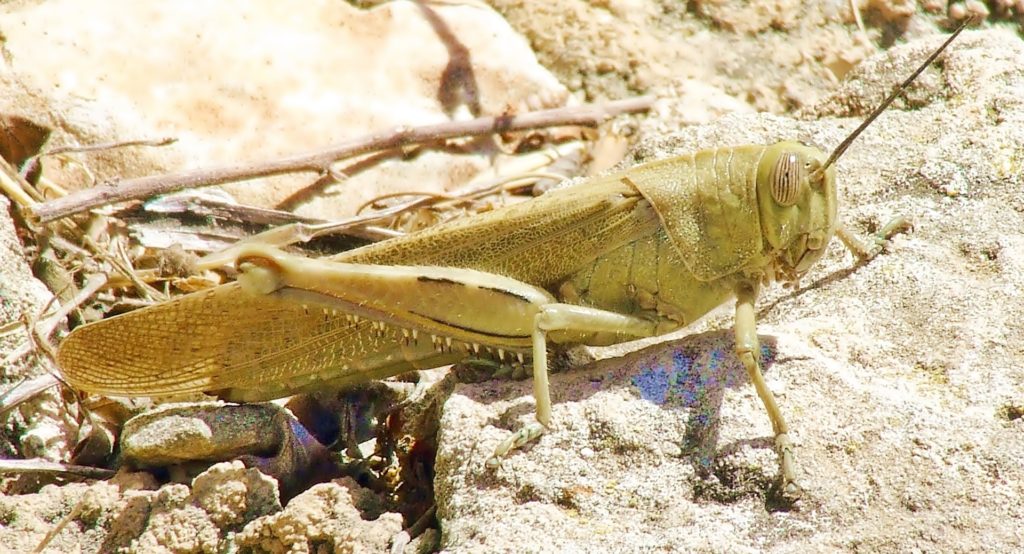
For example, we may think of man as being the most destructive creature on the planet, but he pales into insignificance when set alongside the humble locust. Although they only measure up to 6 centimetres long, they can easily eat their own body weight in food every day. A ton of locusts - which would represent only a very modest swarm – can eat as much food in a day as 2500 people.


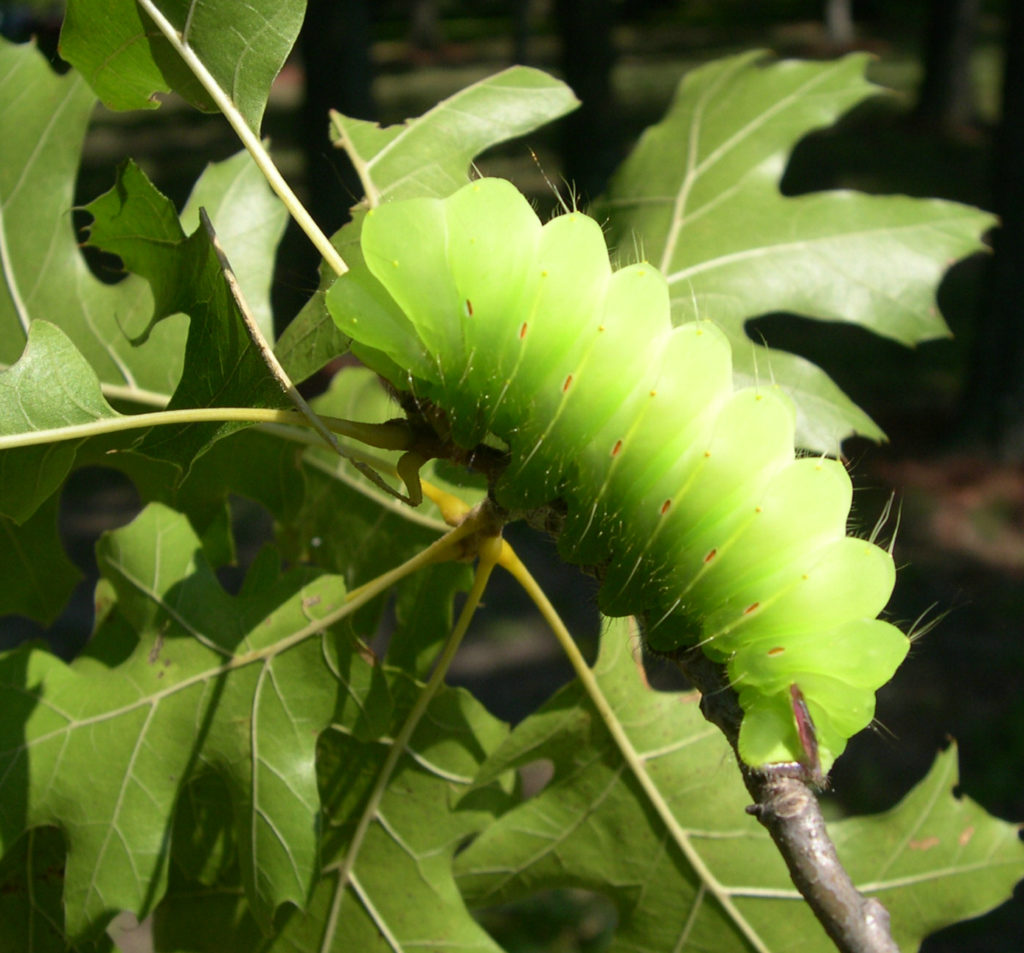
Another big eater is the larva of the polyphemous moth of North America. During its first 55 days it eats the equivalent of 86,000 times what it weighed when it first hatched. If it were a human baby, that would mean putting away 273 tons of food!

© John Welford

Sunday, 18 March 2018

Humans or insects: who's doing better?


An impartial observer from another planet might soon deduce that it was insects, rather than human beings that constituted the most successful form of animal life on Planet Earth.

Just look at the facts:

There is only one species of human, but possibly as many as eight million insect species that have evolved to fit just about every habitable zone on the plant.

Humans have been around for no more than two million years, but the fossil record shows that insects were around hundreds of millions of years ago. Modern cockroaches, for example, have changed very little from their ancestors that lived 300 million years ago.

However, some species have undergone considerable change – fossilised dragonflies have been found with wingspans similar to that of a modern seagull.

Here are some other remarkable facts about insects:

Although there is a huge range of butterfly species, there are ten times as many species of moth.

The world’s smallest insect is the fairyfly, at 0.2 millimetres across – about the size of the dot on the i of “insect”!

Silkworms (which are not worms but insects) are no longer found in the wild but have been completely domesticated as producers of silk.

© John Welford

Friday, 13 May 2016

Parasitic wasps


Parasitic wasps, such as the ichneumon wasp pictured here, have a life cycle that sounds horrific at first hearing, but they actually perform a great service to mankind by focusing their attention on species that we normally regard as pests for the damage they do to crops.

Parasitic wasps breed by laying their eggs inside other small creatures, such as spiders, aphids, caterpillars or other species of wasp. This is done by injecting the eggs through an ovipositor, or egg-laying tube.

When the eggs hatch, the larvae eat their way out of the host’s body, resulting in the death of the latter. As many as 3000 wasp eggs can be laid inside a host.

Some very small species of parasitic wasp lay their eggs inside the eggs of other species. The introduced eggs then divide many times before hatching, such that as many 150 wasps (all clones of each other) can emerge from a single host egg.

However, parasitic wasps do not always have things their own way. One species of parasite can become the host for a different species, and this can happen several times over in a process known as hyperparasitism.

The smallest known insect, the fairy fly, is a parasitic wasp that infects insect eggs. The fairy fly is only 0.2 millimetres long.


© John Welford

Sunday, 17 April 2016

Water scorpion


Water scorpions are not true scorpions but they do have some features in common, such as pincer-like front legs and an elongated abdomen. Both types of ‘scorpion’ are voracious hunters. Members of the Nepidae family (there are 14 genera within the family) are found on every continent except Antarctica.

Water scorpions are of two types, either needle-shaped (‘needle bugs’) or resembling a dead leaf in appearance.

Water scorpions live in plants close to the water’s edge where they can stay still for many hours before pouncing on prey that comes too close in the water. They will then grab the prey (such as tadpoles, small fish and other aquatic animals) and inject it with venom to paralyze it. They will then suck it dry of its body contents.

Water scorpions do not possess gills but have a breathing tube that is used like a snorkel. They also trap air bubbles in their body hair and use these to breathe underwater.

Male water scorpions attract females by rubbing their forelegs against their bodies. Females lay their eggs in slits in plant stems.


© John Welford

Sunday, 20 March 2016

Bombardier beetle


The bombardier beetle is found in woodlands and gardens. It lays its eggs in leaf litter and similar environments, where its grubs will have food ready to hand when they hatch.

It can be recognised from its dark abdomen (the rest being yellowy-brown in colour) and its long antennae.

When they hatch, the grubs grow quickly and shed their skin as they grow bigger before they pupate, after which they emerge in the adult state.

Bombardier beetles cannot fly, but they defend themselves by emitting a burning liquid from their rear ends. The chemicals they need for this liquid are stored in the abdomen and mixed in a special chamber before being sprayed at a would-be predator.


© John Welford

Friday, 11 March 2016

Leafhopper


There are many different species of leafhopper, an insect that is found throughout the world in many different environments.

They are related to cicadas and are often well camouflaged by being shaped and coloured like the leaves on which they feed.

They are strong fliers and can also jump great distances, hence their name.

Eggs are laid in plant stems where they can remain dormant for some considerable time – up to a year in some cases. On hatching, the bugs feed on the sap of the leaves which causes them to shrivel up. Leafhoppers, like aphids, are therefore widely regarded as plant pests.

Leafhoppers are a food source for many species of bird, reptile and large insect.


© John Welford